EN
EN



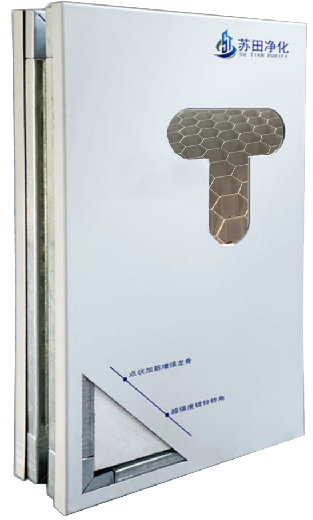
Core Materials: Balancing Thermal Performance and Fire Safety in Sandwich Panel
The core is the functional heart of a sandwich panel, directly dictating its insulation value, fire safety rating, and overall building performance. Selecting the right material requires a clear trade-off between thermal efficiency and fire resistance—no single core excels in every category.
Thermal Insulation Efficiency: PU, PIR, Mineral Wool, EPS, and XPS Compared
Thermal performance is the starting point for most projects. Lower thermal conductivity (λ) means less heat transfer, allowing thinner panels to meet energy codes. The table below compares the most common core materials based on typical industry values.
| Core Material | Thermal Conductivity (W/m·K) | Key Insulation Trait | Best Applications |
|---|---|---|---|
| Polyurethane (PU) | 0.022–0.028 | Highest initial R-value, lightweight | Cold storage, commercial chillers |
| Polyisocyanurate (PIR) | 0.021–0.026 | Stable insulation even under heat, improved fire resistance | Warehouses, cleanrooms, high-temperature processes |
| Extruded Polystyrene (XPS) | 0.029–0.035 | Moisture-resistant, consistent long-term R-value | Inverted roofs, below-grade walls |
| Expanded Polystyrene (EPS) | 0.035–0.038 | Low cost, adequate for moderate climates | Temporary structures, partition walls |
| Mineral Wool (Rockwool) | 0.035–0.045 | Non-combustible, excellent sound absorption | Power plants, schools, fire-rated assemblies |
PU and PIR offer the lowest thermal conductivity, making them ideal where space is limited and energy efficiency is paramount. PIR maintains its insulating properties better at elevated temperatures—a critical advantage for roof panels exposed to direct sun. XPS and EPS, while less efficient per inch, bring cost and moisture-resistance advantages. Mineral wool, though the least thermally efficient of the group, is often required by code for its unmatched fire safety, making it the default choice for high-risk buildings. The trade-off is clear: maximizing insulation often means compromising on fire class—and vice versa.
Fire Resistance Hierarchy: From Non-Combustible Rockwool to Self-Extinguishing PIR
Fire safety in sandwich panels is not a single rating but a hierarchy of performance under fire exposure. The core material determines whether a panel will fuel a fire, resist its spread, or remain structurally intact.
At the top sits mineral wool (rockwool). Made from basalt and recycled slag, it is classified as non-combustible (Euroclass A1) with a melting point above 1000°C. It does not contribute to flame spread, emits no toxic smoke, and provides critical compartmentation. For this reason, it is mandated in many industrial and public building codes.
PIR represents the next tier. It is a thermoset foam that chars when exposed to flame, creating a protective layer that slows fire spread. While combustible, it is considered self-extinguishing and can achieve Euroclass B or C ratings, making it acceptable for many commercial structures where some fire risk is tolerable. PIR panels produce less smoke and fewer toxic gases than traditional PU.
PU and EPS occupy the lowest tier. Standard PU is flammable and, if not properly protected, can contribute to rapid fire development. EPS melts and shrinks away from flames, which can limit initial spread but generates dense, toxic smoke. XPS behaves similarly. These materials are typically restricted to low-risk applications or require additional fire barriers in multi-story buildings.
The choice of core must align with the building’s fire strategy. For life-safety-critical areas, rockwool is non-negotiable. For controlled environments where fire loads are minimal, PIR offers a practical balance of thermal and fire performance.
Outer Skin and Coating Systems: Ensuring Long-Term Durability of Sandwich Panel
The outer skin of a sandwich panel is the primary barrier against environmental degradation, directly determining service life and maintenance costs. Selecting the correct substrate and coating system is not just aesthetic—it is a critical engineering decision that balances corrosion resistance, mechanical strength, and long-term economics.
Steel Grade, Zinc Coating (DX51, S250/S280), and Minimum 190 g/m² Requirements for Corrosion Resistance
The steel substrate’s grade and metallic coating weight are the foundational layers of defense. For non-structural or lightly loaded panels, the drawable DX51 grade is common, offering good formability for roll-forming profiles. Where higher strength is needed to resist wind pressure or span greater distances, structural grades like S250 or S280 are specified, providing a minimum yield strength of 250 MPa and 280 MPa respectively. These structural grades allow the panel to carry design loads without permanent deformation.
The zinc coating weight is the single most important factor in preventing red rust. A widely accepted benchmark for long-term durability in aggressive environments (C3–C4 corrosivity categories per ISO 12944) is a minimum of 190 g/m² of zinc, applied to both sides. This coating, typically achieved via hot-dip galvanizing, provides sacrificial protection: the zinc corrodes preferentially, safeguarding the steel substrate. Lighter coatings of 100–140 g/m² may suffice for dry interiors, but they fail prematurely in coastal or industrial zones where airborne chlorides and sulfates accelerate corrosion. With a 190 g/m² zinc coating and a durable topcoat, the panel can achieve a service life exceeding 40 years before major maintenance, as documented in field performance reviews.
Aluminum, Polymer-Coated Galvanized Steel, and Cor-Ten: Lifecycle, Cost, and Aesthetic Trade-offs
Beyond basic galvanized steel, three alternative skin materials present distinct trade-offs in lifecycle performance, initial cost, and visual appeal. The table below summarizes their key differences.
| Material | Lifecycle & Durability | Relative Cost | Aesthetic Character |
|---|---|---|---|
| Aluminum | Excellent corrosion resistance without a coating; naturally forms a protective oxide layer. Ideal for marine and high-humidity locations. Lower strength-to-weight ratio than steel, requiring thicker gauges. | High (2x–3x steel) | Smooth, modern appearance; can be anodized or left to weather naturally. |
| Polymer-Coated Galvanized Steel | The most common system. The zinc layer provides cathodic protection, while the polymer topcoat (e.g., PVDF, SMP) blocks UV and moisture. System life depends on coating integrity; a 25 µm PVDF coating can last 30+ years with minimal chalking. | Moderate | Wide color range and gloss levels; can replicate wood or stone textures. |
| Cor-Ten (Weathering Steel) | Forms a dense, adherent rust patina that halts further corrosion in alternating wet-dry cycles. Unsuitable for continuously wet or marine salt-spray environments. Perforation can occur if moisture is trapped. | Moderate | Distinctive warm, rusty brown color; often used for architectural expression. |
The choice depends on the project’s priorities. Aluminum offers a maintenance-free, corrosion-proof solution but at a premium. Polymer-coated galvanized steel provides the best balance of cost, strength, and design flexibility, making it the default in most commercial and industrial buildings. Cor-Ten steel is a niche aesthetic choice where the rusted look is desired, but its performance is highly climate-dependent. For any sandwich panel, the skin material must be compatible with the adhesive and core, ensuring the composite bond remains intact throughout the panel’s service life.
Beyond Insulation: Critical Functional Properties of High-Quality Sandwich Panel
Soundproofing Performance (STC) Linked to Core Density, Skin Bond Integrity, and Layered Mass
Soundproofing effectiveness in a sandwich panel is measured by its Sound Transmission Class (STC). A higher STC rating indicates better airborne noise reduction. The core material plays a decisive role: dense, fibrous cores like mineral wool inherently absorb sound waves, often achieving STC ratings above 30, while lighter foam cores may fall below 25. However, STC is not solely a core property. A rigid, continuous bond between the core and the metal skins prevents vibration and sound flanking. If the adhesive layer fails, the panel acts as a drum, amplifying noise. The layered mass of the two skins, combined with a dense core, creates an impedance mismatch that reflects sound energy. Designing for high STC thus requires balancing core density, skin thickness, and adhesive integrity to meet acoustic specifications for offices, cleanrooms, or industrial enclosures.
Structural Stiffness and Chemical Resistance for Industrial and Harsh-Environment Applications
A high-quality sandwich panel delivers structural stiffness far beyond its weight. The composite action of the core and skins provides high bending rigidity, allowing long spans without intermediate supports. The panel’s stiffness depends on the core’s shear modulus and the skin’s tensile strength. For industrial plants, food processing, or chemical storage, the outer coating must resist aggressive substances. Polymer-coated galvanized steel with a minimum zinc coating of 190 g/m² offers robust corrosion protection. For heightened chemical exposure, panels with PVDF or plastisol topcoats withstand acids, alkalis, and cleaning agents without degradation. This combination of high stiffness and tailored chemical resistance ensures the panel maintains its structural integrity and airtightness over decades, even in washdown environments or areas with airborne contaminants.
FAQ
What is the most thermally efficient core material for sandwich panels?
Polyurethane (PU) and Polyisocyanurate (PIR) are the most thermally efficient cores, offering the lowest thermal conductivity values.
Which core material excels in fire safety?
Mineral wool (rockwool) is the best choice for fire safety due to its non-combustible properties and high melting point.
How does the zinc coating weight impact the durability of sandwich panels?
A minimum zinc coating weight of 190 g/m² provides excellent corrosion resistance, ensuring a long service life in aggressive environments.
What are the merits of polymer-coated galvanized steel?
Polymer-coated galvanized steel strikes a balance between cost, durability, and aesthetic flexibility, making it suitable for most commercial applications.
How does sandwich panel design impact soundproofing?
Soundproofing is influenced by core density, skin bond integrity, and layered mass, with denser cores like mineral wool achieving higher STC ratings.