EN



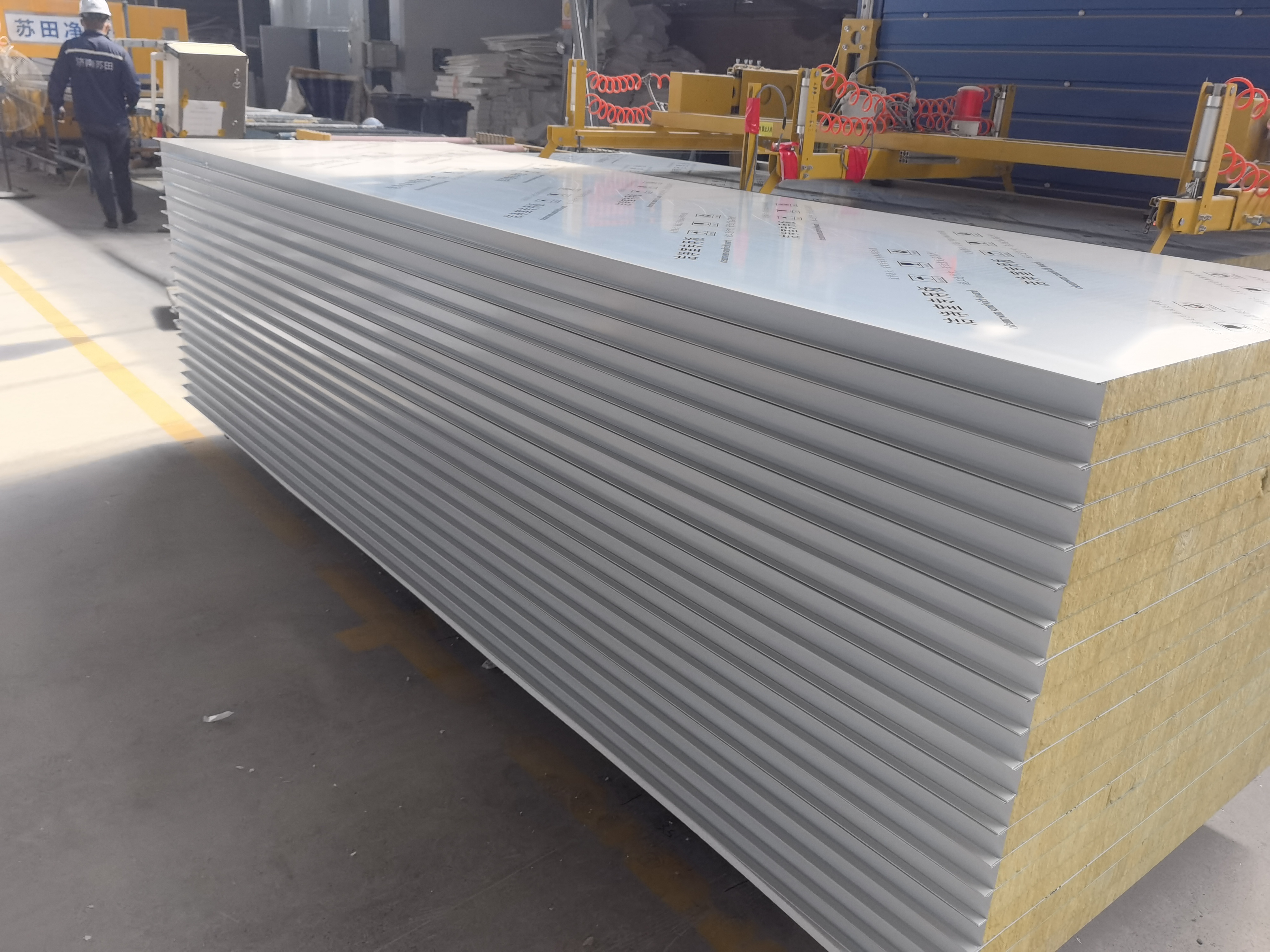
Why Rockwool Panels Achieve True Passive Fire Protection
Non-combustible mineral composition: Melting point >1000°C, zero flame spread, no toxic smoke
Rockwool panels are made from spun volcanic rock—primarily basalt—and recycled slag, materials that are inherently non-combustible. This composition earns them the Euroclass A1 rating under EN 13501-1, the highest classification for reaction to fire, confirming zero contribution to flame spread, no flaming droplets, and no toxic smoke generation. With a melting point exceeding 1000°C—well above temperatures in typical building fires’ early and fully developed stages—rockwool remains dimensionally stable under direct flame exposure. Rather than igniting or degrading, it acts as a passive thermal and physical barrier, slowing heat transfer and compartmentalizing fire without mechanical activation or maintenance. Independent full-scale fire tests show rockwool panel systems can maintain structural integrity and insulation performance for up to four hours, significantly delaying flashover and protecting load-bearing elements from thermal failure—giving occupants critical time to evacuate and responders time to intervene.
Clarifying ‘fireproof’ vs. certified fire resistance: A1 classification and EI 120 performance under EN 13501-1
“Fireproof” is a misnomer—no material is impervious to fire. What matters is standardized, third-party–verified fire resistance. Rockwool panels meet the strictest benchmarks: Euroclass A1 under EN 13501-1 confirms the core material itself is non-combustible, while assemblies tested to EN 13501-2 achieve EI-rated classifications—such as EI 120—meaning they maintain both E (integrity: no flame or hot gas passage) and I (insulation: limiting temperature rise on the unexposed side) for at least 120 minutes. This dual certification reflects rigorous evaluation of the complete system, not just the insulation. Unlike combustible or limited-combustible alternatives, rockwool panels deliver predictable, repeatable performance across fire exposure scenarios—no melting, no smoke, no flame penetration—making them a trusted foundation for life-safety–driven design decisions.
UL-Listed Fire-Rated Assemblies Using Rockwool Panels
Validated Exterior, Interior, and Roof Systems with 1-Hour and 2-Hour Fire Ratings
UL-listed fire-rated assemblies incorporating rockwool panels provide code-compliant solutions for exterior walls, interior partitions, and roof systems requiring 1-hour or 2-hour fire-resistance ratings. These assemblies are validated through full-scale testing per UL 263 (equivalent to ASTM E119), where rockwool’s non-combustibility and thermal stability—rooted in its >1000°C melting point—enable reliable containment of flame, heat, and smoke. Typical configurations include 4-inch-thick mineral wool in steel-studded cavity walls for 1-hour performance, and 6-inch builds for 2-hour ratings in high-demand applications like corridor enclosures and vertical shafts. Roof assemblies using rockwool panels over metal decking also meet stringent endurance requirements, offering a proven alternative to plastic foam insulations. Designs such as UL U305 (walls) and W415 (roofs) demonstrate consistent 1- and 2-hour ratings without intumescent coatings or supplemental fire-stopping—supporting robust compartmentalization in hospitals, high-rises, and data centers where egress protection and structural resilience are non-negotiable.
Global Regulatory Compliance: Meeting NFPA 285, ASTM E84/E136, and CAL FIRE BML Requirements
Rockwool panels satisfy the most demanding international fire safety standards without modification or added treatments. Because their stone wool core is inherently non-combustible, assemblies using rockwool typically avoid mandatory NFPA 285 testing—a full-scale wall-system test required by the 2024 IBC when combustible components are present. For surface burning behavior, ASTM E84-23 confirms Class A performance: a flame spread index of 0 and smoke-developed index of 0—well below the maximum allowable values of 25 and 450. ASTM E136 further verifies non-combustibility, aligning with construction Types I–IV requirements. In wildfire-prone areas, CAL FIRE’s Building Material Listing (BML) program recognizes rockwool panels as approved non-combustible insulation, supporting compliance with Wildland-Urban Interface (WUI) codes. This convergence of test results delivers a streamlined, evidence-based path to regulatory approval—no fire-retardant additives, no performance compromises.
Real-World Performance in High-Standard Projects: Hospitals, Data Centers, and High-Rises
Case-aligned benefits: Integrity, insulation, and compartmentalization in mission-critical buildings
In hospitals, data centers, and high-rise towers—where fire safety directly impacts human life, operational continuity, and structural integrity—rockwool panels deliver integrated passive protection. Their non-combustible stone wool core maintains dimensional stability under extreme heat, preserving fire-separation walls, floor/ceiling assemblies, and shaft enclosures even when active suppression is delayed. In data centers, rockwool-lined enclosures prevent flame and hot gases from migrating between server racks, reducing equipment damage and downtime. In hospitals, low temperature rise on the unexposed side prevents secondary ignition of medical furnishings and supports safe, phased evacuation in complex patient-care environments. In high-rises, continuous rockwool fire breaks between floors interrupt vertical fire spread and sustain egress corridor protection far beyond minimum code thresholds—ensuring safe evacuation routes remain viable throughout emergency response. This triad of integrity, insulation, and compartmentalization makes rockwool panels a foundational element in mission-critical building envelopes where reliability cannot be delegated to systems that activate—or fail—under stress.
FAQ
What does the Euroclass A1 rating signify for Rockwool panels?
This rating, under EN 13501-1, confirms that the material is non-combustible, does not contribute to flame spread, produces no flaming droplets, and generates no toxic smoke.
What is the difference between fireproof and certified fire resistance?
“Fireproof” implies imperviousness to fire, which no material achieves, whereas certified fire resistance involves verified standards for how materials perform under fire exposure, such as EI 120 classifications.
How long can Rockwool panels maintain their fire-resistance performance?
Independent tests show systems using Rockwool panels can maintain structural integrity and insulation performance for up to four hours during a fire.
Are Rockwool panels suitable for compliance with wildfire codes?
Yes, Rockwool panels are recognized by CAL FIRE’s Building Material Listing (BML) program as approved non-combustible insulation for Wildland-Urban Interface (WUI) codes.