EN
EN



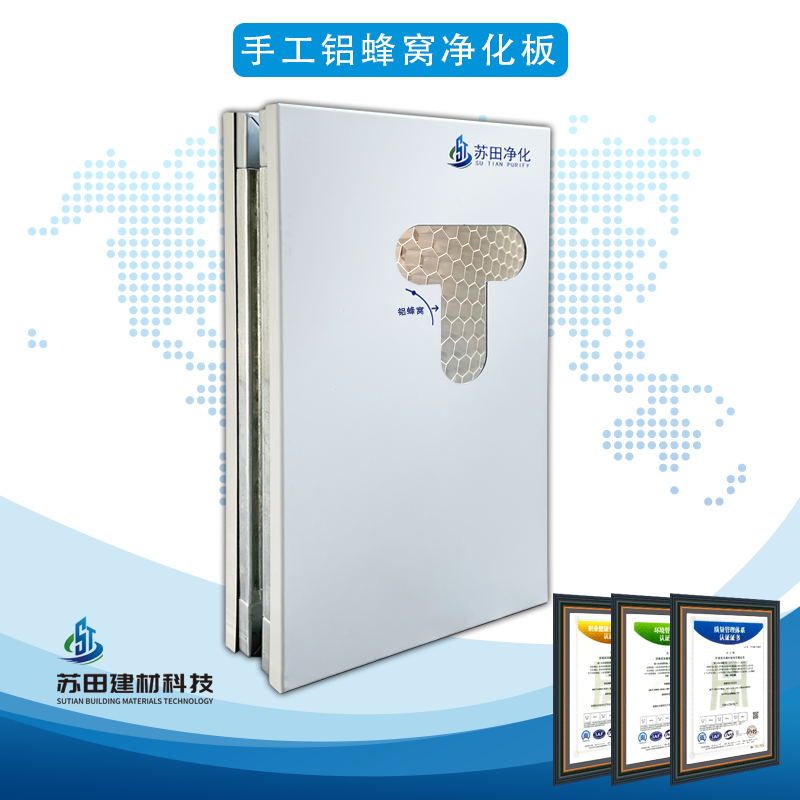
Why OEM Manufacturing Enables Precision Custom Sizes for Insulated Metal Panels
Factory-controlled tolerances and CNC fabrication for non-standard dimensions
OEM production of insulated metal panels (IMPs) leverages a tightly controlled factory environment where CNC (Computer Numerical Control) systems cut, rout, and profile metal skins to within ±0.5 mm—far exceeding the dimensional consistency achievable with field tools. Engineers program custom widths, lengths, and edge profiles directly into the fabrication line, bypassing the variability inherent in on-site cutting. This digital-to-physical workflow ensures that even complex geometries—like a 7.2-meter tapered facade panel—match the BIM model exactly, eliminating cumulative dimensional drift and the need for field shimming or trimming. As confirmed by the IMP Quality Metrics 2023 conformity benchmark report, CNC-driven IMP lines achieve over 98% dimensional accuracy on first-run production. The result is a building envelope that integrates seamlessly, preserving both air barrier continuity and design fidelity.
Core insulation bonding integrity across variable thicknesses and panel configurations
The thermal and structural performance of custom IMPs hinges on consistent adhesion between metal skins and the insulating core—a bond achieved only under precise factory conditions. OEM lamination lines dynamically calibrate heat, pressure, and cure time for each configuration: a 150 mm panel for cold storage receives extended thermal control in the cure zone; a tapered roof panel engages dynamic platen pressure adjustment; and curved panels benefit from radius-specific substrate pre-heating. These controls prevent voids, delamination, and thermal bridging—ensuring shear strength remains above 0.15 MPa and full composite action is maintained. The table below summarizes how key configurations are optimized for bonding integrity:
| Panel Configuration | Core Thickness (mm) | Key Bonding Control Parameter | Typical Application |
|---|---|---|---|
| Flat Wall Panel | 50–100 | Line speed & metered foam laydown | Commercial building envelope |
| High-R Wall Panel | 125–200 | Extended cure-zone temperature control | Cold storage, freezer enclosures |
| Tapered Roof Panel | 75–150 (variable) | Dynamic pressure platen adjustment | Single-slope roof drainage design |
| Curved Facade Panel | 60–100 | Radius-specific substrate pre-heating | Architectural feature walls |
Field-assembled alternatives lack this level of process control, often resulting in inconsistent adhesion, reduced R-value, and long-term creep. OEM manufacturing guarantees that every custom-sized panel delivers the same structural integrity and thermal performance as its standard counterpart.
Architectural Design Freedom with Custom Insulated Metal Panels
Curved, tapered, and radius-cut insulated metal panels for dynamic façades
Custom IMPs unlock expressive architectural forms—curves, tapers, and precision radius cuts—without compromising performance. CNC machining ensures each panel conforms exactly to the specified geometry in the BIM model, eliminating manual bending and associated risk of core separation or finish damage. The rigid foam core bonds integrally to both skins, so curved or tapered sections retain full thermal resistance, structural rigidity, and weather tightness. Tapered panels support sloped transitions; radius-cut edges integrate cleanly with glazing, corners, or adjacent cladding. Because these geometries are fabricated—not adapted—on site, the factory-applied finish remains intact, and quality is uniform across the entire envelope.
Pre-integrated features: thermal breaks, anchor embeds, and service openings
OEM fabrication enables critical performance features to be embedded during manufacturing—not added in the field. Thermal breaks—low-conductivity inserts between skins—reduce condensation risk and improve whole-wall U-values. Anchor points are either pre-welded or cast-in, enabling direct attachment to primary structure and eliminating secondary framing. Service openings for vents, conduits, or lighting are CNC-cut and structurally reinforced at the factory, protecting the insulation layer and vapor barrier from field damage. These integrations maintain airtightness and structural continuity while accelerating installation by up to 30%, reducing labor costs and minimizing opportunities for error. The outcome is a high-performance envelope delivered with precision, reliability, and aesthetic coherence.
Streamlined Customization Workflow: From BIM Specification to Field Installation
Digital fabrication and BIM-driven coordination cutting field errors by 37% (2023 NIBS IMP Benchmark)
Modern OEM IMP customization operates on a closed-loop digital workflow: architectural intent flows directly from the coordinated BIM model to CNC fabrication systems—no translation through shop drawings. Every non-standard dimension, taper, or cutout is extracted automatically, ensuring alignment between design, engineering, and production. According to the 2023 NIBS IMP Benchmark, this BIM-to-fabrication integration reduces field errors by 37% by catching clashes and resolving geometry conflicts before material is cut. Panels arrive pre-finished, pre-drilled, and pre-equipped with thermal breaks and anchor embeds—ready for immediate installation. Crews no longer re-measure, re-cut, or improvise. This precision coordination safeguards schedule integrity, eliminates rework, and ensures the final envelope delivers the intended thermal, structural, and aesthetic performance—exactly as designed.
FAQ
-
What is OEM manufacturing for insulated metal panels (IMPs)?
OEM manufacturing for IMPs involves factory production with precise tools like CNC systems to create customized panels that meet specific project requirements.
-
How do CNC systems enhance precision for IMPs?
CNC systems allow engineers to program custom dimensions directly into fabrication lines, ensuring greater precision than traditional field tools.
-
Why is bonding integrity important for IMPs?
Bonding integrity ensures consistent adhesion between metal skins and insulation cores, preventing issues like voids, delamination, and reduced thermal performance.
-
What architectural benefits do custom IMPs offer?
Custom IMPs enable dynamic designs like curves, tapers, and radius cuts, maintaining structural and thermal performance while enhancing aesthetic appeal.
-
How does BIM-driven coordination improve IMP fabrication?
BIM-driven coordination directly integrates design with production, minimizing field errors and ensuring panels are delivered exactly as specified.