EN



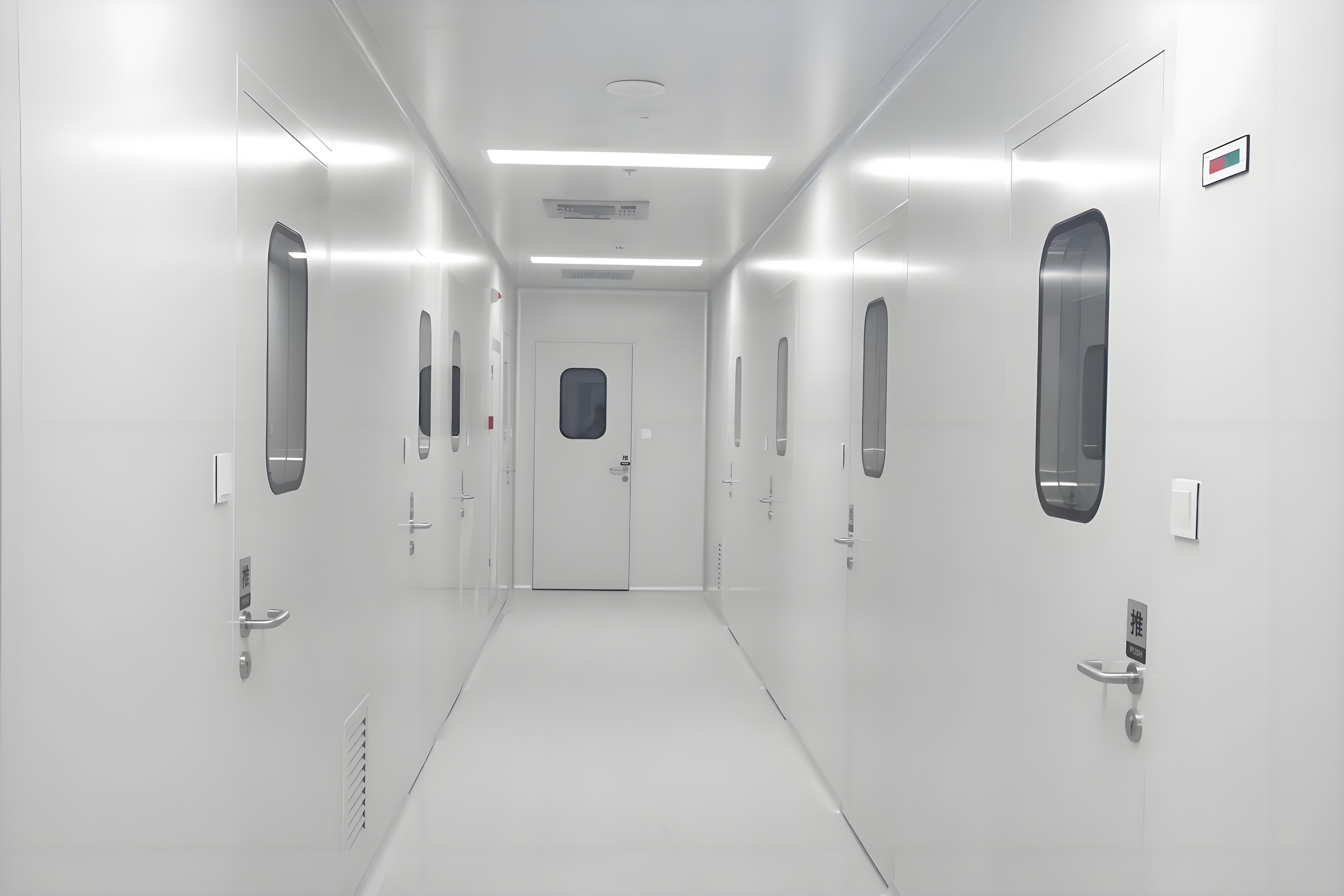
Why Cleanroom Doors Are Critical to Contamination Control
Cleanroom doors are dynamic barriers—not passive entry points—that directly govern particle control, pressure stability, and airflow integrity in classified environments. Unlike static walls, they open and close repeatedly each shift, creating frequent opportunities for cross-contamination between zones of differing cleanliness levels. Every actuation can disrupt unidirectional airflow, transiently erode differential pressure, and draw unfiltered air into the controlled space. In pharmaceutical, semiconductor, and biotechnology settings, even momentary pressure cascades risk compromising product sterility or reducing wafer yield.
Well-engineered cleanroom doors mitigate these risks through flush surfaces, tight perimeter seals, interlocked operation, and precisely controlled closing speeds. They also support safe personnel and material transfer by minimizing both the duration and exposed area of the opening. When seals degrade or alignment shifts, contamination migrates through gaps, pressure differentials falter, and recovery time lengthens—increasing the likelihood of nonconformances. As such, door selection, installation, and maintenance are foundational to contamination control strategy—not secondary architectural considerations. A reliable door system helps sustain the required ISO classification while reducing costly shutdowns, deep cleaning, and production delays. Cleanroom doors must therefore be treated as critical contamination control components, not conventional facility hardware.
Key Types and Design Features of Cleanroom Doors
Cleanroom doors are not interchangeable; their type, sealing performance, and surface design directly influence pressure differentials, particulate retention, and daily operational flow. Optimal selection balances opening speed, seal integrity, material compatibility, and cleanability.
Swing, Sliding, and High-Speed Automatic Cleanroom Doors
Swing doors offer economical, tight-sealing performance but their arc of motion can disturb laminar airflow—requiring careful orientation (inward or outward) to align with pressure cascade logic. Sliding doors sit flush against the wall, eliminate swing-induced turbulence, conserve floor space, and achieve consistent perimeter sealing—especially when automated. High-speed automatic doors further reduce open time, limiting air exchange between classified spaces. Facility teams often integrate sliding or high-speed doors with interlocks in gowning rooms and material airlocks to prevent simultaneous openings. Door type should be driven by traffic frequency, spatial constraints, and ISO class—not cost alone.
Material, Sealing, and Surface Integrity Requirements
Material selection impacts cleanability, chemical resistance, and long-term durability. Stainless steel 304 or 316L and anodized aluminum are industry standards: they resist corrosion, enable seamless, crevice-free construction, and withstand aggressive disinfectants. Door leaves must avoid exposed fasteners, ledges, or recesses that trap particles. EPDM or silicone perimeter gaskets maintain pressure integrity; sliding doors often require motorized bottom seals for full closure. Vision windows—when needed—use flush-mounted safety glass to preserve visibility without introducing horizontal dust-collecting surfaces. All hardware (hinges, handles, closers) must be hygienic, non-shedding, and resistant to repeated cleaning. Gaskets must be replaceable and inspected during routine maintenance, as seal degradation is a leading cause of pressure loss. Surface finish—brushed or polished—should match the cleanroom class and compatible cleaning agents.
Compliance with ISO, FDA, and GMP Cleanroom Door Standards
Cleanroom doors must comply with ISO 14644-1/2 air cleanliness limits, FDA 21 CFR Part 211 documentation requirements, and EU GMP Annex 1 (2022) mandates for sterile manufacturing. These are not optional benchmarks—they shape door design, sealing architecture, and requalification protocols.
FDA cGMP requires traceable material certifications, surface finish records, and cleaning validation for every door component. EU GMP Annex 1 (2022) adds prescriptive expectations: doors must exclude wood and uncleanable recesses, interlock in Grade A/B airlocks, and maintain a minimum 10 Pa pressure differential between adjacent grades. Requalification intervals are six months for Grade A/B and annually for Grade C/D—many facilities supplement this with quarterly integrity testing in critical ISO 5–6 zones. USP <797> and <800> also define pressure differential expectations for pharmaceutical compounding. ISO 14644-2 further mandates periodic airborne particle monitoring to verify seal stability over time.
Performance verification provides objective evidence for auditors and operators alike. Under ASTM E283, high-performance cleanroom doors typically limit air leakage to less than 0.05 cfm/ft² at 1.57 psf test pressure—a benchmark supporting particle control and pressure stability across ISO Class 5–8 environments. Documenting these results before commissioning and after maintenance demonstrates proactive contamination control and strengthens compliance posture across pharmaceutical, semiconductor, and biotech operations.
Selecting the Right Cleanroom Doors for Your Facility Class and Application
Matching Door Specifications to ISO Class 5–8 Environments
Door selection must begin with the ISO 14644-1:2015 classification. In ISO Class 5 (or stricter) zones—where airborne particle limits are most stringent—doors demand reinforced frames, robust sealing systems, and rapid-closing mechanisms to minimize particulate exchange. For ISO Class 7–8 environments, while sealing requirements are less extreme, doors still require smooth, non-shedding surfaces, durable gaskets, and controlled opening speed. Personnel and material traffic patterns must inform the decision: high-traffic areas need wear-resistant hinges and alignable seals to preserve containment over time. Ultimately, door weight, gasket compression force, and frame rigidity must all align with the allowable airborne particle concentration for each classified space.
Application-Specific Considerations: Pharma, Semiconductor, and Biotech Use Cases
Pharmaceutical facilities require doors with chemically resistant finishes capable of withstanding repeated exposure to hydrogen peroxide vapor, alcohol-based disinfectants, and sodium hypochlorite. Semiconductor cleanrooms benefit from high-speed automatic doors that curtail particle ingress during frequent wafer or reticle transfers. Biotech and cell-processing suites prioritize microbial control—so surfaces must be seamless, easily cleanable, and compatible with sporicidal agents like peracetic acid. In each case, door specifications must reflect regulatory expectations (FDA, EU GMP), process sensitivity, and decontamination protocols. Thoughtful selection reduces cross-contamination risk, reinforces pressure cascades, and enhances operational resilience.
FAQ
Why are cleanroom doors critical for contamination control?
Cleanroom doors help maintain particle control, pressure stability, and airflow integrity. They minimize the risk of contamination during personnel and material transfer and reduce costly occurrences such as shutdowns and product contamination.
What are the main types of cleanroom doors?
Cleanroom doors include swing doors, sliding doors, and high-speed automatic doors. Each type has distinct benefits depending on the facility's traffic patterns, spatial constraints, and cleanliness requirements.
What materials are recommended for cleanroom doors?
Stainless steel 304 or 316L and anodized aluminum are ideal, as these materials resist corrosion, facilitate seamless construction, and withstand frequent cleaning and disinfectants.
What standards must cleanroom doors comply with?
ISO 14644 standards, FDA regulations, and EU GMP Annex 1 requirements shape cleanroom door design. These standards prescribe air cleanliness limits, pressure differentials, and material certifications.