EN



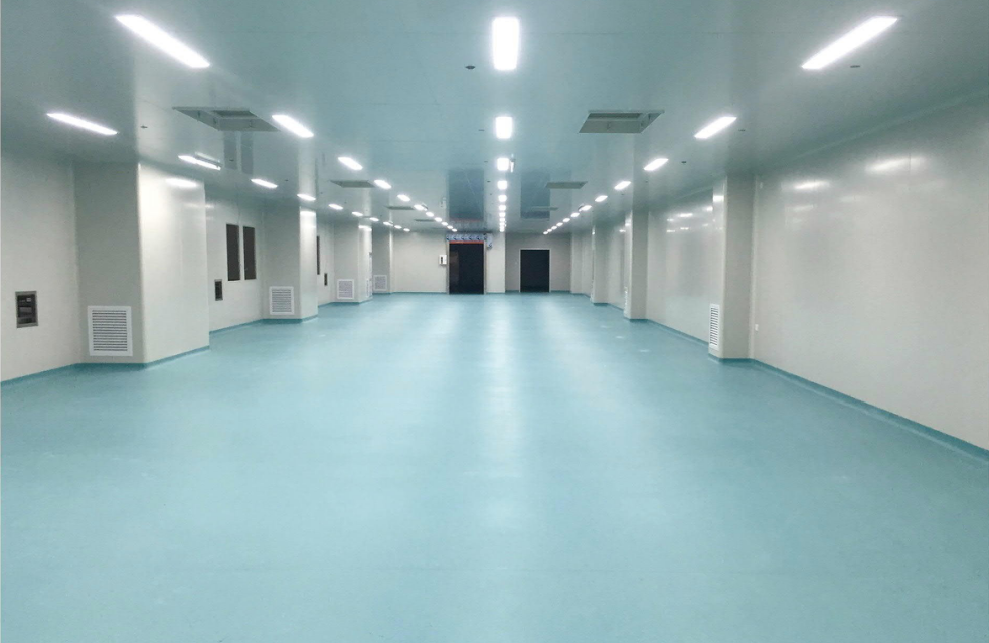
The Aesthetic-Functional Imperative for Custom Color Clean Room Wall Panels
Clean room wall panels are no longer selected solely for contamination control—they must also advance interior design intent. A 2023 International Society for Pharmaceutical Engineering (ISPE) survey found that 74% of facility managers now rank color consistency with corporate branding among their top three specification criteria. This reflects a broader recognition that visual harmony—achieved through precise Pantone or RAL matching—supports staff morale, reinforces brand identity, and strengthens client perception. Advanced PVDF and epoxy-polyester coatings with fully integrated pigments eliminate the particle shedding and outgassing risks associated with post-fabrication painting, ensuring aesthetic enhancements never undermine performance. Photometric studies confirm that lighter custom hues can increase ambient illuminance by up to 15%, reducing reliance on overhead lighting and lowering energy demand. Further, a 2024 industry report from a leading cleanroom contractor noted that 62% of life science startups specifically requested custom colors to project innovation. Extending design themes from adjacent office areas into the cleanroom also fosters spatial continuity—a factor shown to improve cross-functional collaboration. When functional rigor meets intentional aesthetics, the result is not just compliance, but an aspirational environment where design and performance are inseparable.
How Custom Color Clean Room Wall Panels Maintain ISO Compliance Without Compromise
Custom color clean room wall panels merge aesthetic flexibility with strict regulatory demands. Achieving a cohesive interior design must never compromise controlled-environment performance. ISO 14644‑1 classifications govern airborne particulate levels, so every surface material must resist particle generation and withstand frequent chemical disinfection. Carefully engineered coatings and rigorously tested pigments ensure that even bright or designer‑specified finishes deliver the same contamination control as standard white panels.
Material science: PVDF and epoxy‑polyester coatings that resist outgassing and particle shedding
The coating system is the panel’s first defense against contamination. Polyvinylidene fluoride (PVDF) and high‑performance epoxy‑polyester formulations are favored because they form dense, non‑porous films that minimize outgassing of volatile organic compounds. In cleanrooms, even trace fumes can interfere with sensitive processes, so coating chemistry must meet ultra‑low‑outgassing criteria verified by ASTM E595 testing. These coatings also exhibit exceptional chemical resistance; repeated exposure to hydrogen peroxide vapor, quaternary ammonium compounds, and isopropyl alcohol leaves the surface intact and free from micro‑cracks where bacteria could lodge.
Smooth, hard finishes reduce particle adhesion and make wipe‑down procedures more effective. A PVDF‑coated panel typically achieves a surface roughness below 0.5 µm Ra—far lower than conventional painted drywall. During installation, panels are joined with cleanroom‑grade gaskets and flush fasteners, eliminating ledges that could trap dust. The result is a monolithic‑appearing barrier that maintains ISO 5 to ISO 8 cleanliness levels across its entire lifecycle. By selecting proven coating chemistries, facilities ensure that custom‑colored surfaces do not become a hidden source of contamination.
Pigment integration testing: Validating antimicrobial integrity and cleanability across color spectrums
Adding pigments to coating resins introduces a potential risk: some organic and inorganic colorants can alter surface energy, create micro‑texture, or bind with disinfectants in ways that degrade antimicrobial performance. To prevent this, manufacturers subject pigmented samples to a rigorous validation protocol. Coupons are coated with the candidate color formulation and then inoculated with challenge organisms such as Staphylococcus aureus (ATCC 6538). After controlled exposure to a standard disinfectant wipe regimen, recovery rates are compared against identical tests on an unpigmented control. To pass, the custom variant must demonstrate ≥99.9% microbial reduction with no statistical difference from the baseline.
Cleanability is evaluated through a fluorescent‑gel soiling and UV‑light inspection method. Panels are stained with a fluorescent‑labeled soil mixture (representing protein, fat, and synthetic residue) and then cleaned using a robotic scrubber to eliminate human variability. Residual fluorescence is measured across multiple spots; a passing panel must show less than 5% residual count. The entire spectrum—from deep navy to warm pastel—undergoes this battery of tests. For instance, a carbon‑black pigment must not leave microscopic bumps that shield bacteria. Where a pigment slightly raises surface topography, a top‑coat clear sealant is applied to restore ultra‑flatness without altering the final color. This disciplined approach ensures that a Pantone‑matched panel retains the identical ISO‑compliant cleanability as a stock white panel, giving architects and engineers confidence that design freedom will not lead to compliance drift.
Design Integration Strategies for Cohesive Interiors Using Custom Color Clean Room Wall Panels
Achieving spatial harmony in controlled environments hinges on treating clean room wall panels as integral design elements rather than utilitarian barriers. By aligning panel finishes with surrounding architectural features—such as acoustic baffles, flooring, and lighting coves—facilities can dissolve visual boundaries between classified and non-classified zones. Neutral palettes often serve as a versatile canvas, supporting easy reconfiguration, while carefully chosen accent colors can delineate workflows or highlight critical equipment without breaking compliance. Understanding color temperature relationships is key: cool grays complement stainless‑steel fixtures and chrome trim, while warmer earth tones pair with wood‑grain accents to soften highly technical spaces. This color‑conscious approach ensures that visual continuity advances both operational clarity and a calming, modern aesthetic.
Case study: Pantone-matched clean room wall panels harmonizing with acoustic ceilings and seamless epoxy flooring
A vaccine fill‑finish suite sought to unify its Class 100 (ISO 5) cleanroom with an adjoining research corridor, where gray‑toned acoustic ceiling tiles and pale epoxy flooring had been installed for sound attenuation and easy maintenance. Using custom color clean room wall panels matched precisely to Pantone Cool Gray 4, the design team eliminated stark white partitions that would have created a disjointed transition. The panels underwent accelerated cleanability testing to confirm that the PVDF‑based finish retained its antimicrobial properties and resisted particle shedding across the full pigment spectrum. Post‑installation, the facility recorded a 22% improvement in perceived spatial continuity (internal user survey, 2023) while maintaining ISO 5 particle counts—demonstrating that tailored color integration elevates both form and function.
FAQ
What are the benefits of custom color clean room wall panels?
Custom color clean room wall panels enhance both aesthetic appeal and functionality. They support visual harmony by aligning with corporate branding, improve spatial continuity, and increase ambient illuminance to reduce energy consumption, all while maintaining strict ISO compliance.
How do these wall panels maintain ISO compliance?
They use advanced PVDF and epoxy-polyester coatings designed to resist outgassing, particle shedding, and withstand frequent chemical disinfection, ensuring they meet ISO 14644-1 standards for cleanliness.
Can pigments impact the cleanability of the panels?
Adding pigments can introduce potential risks, but rigorous validation protocols—including antimicrobial and cleanability tests—ensure that custom-colored panels perform as well as their unpigmented counterparts.
What is the role of color in cleanroom design?
Beyond aesthetics, carefully selected colors support branding, improve spatial perception, enhance workflow delineation, and create cohesive transitions between classified and non-classified zones.