EN
EN



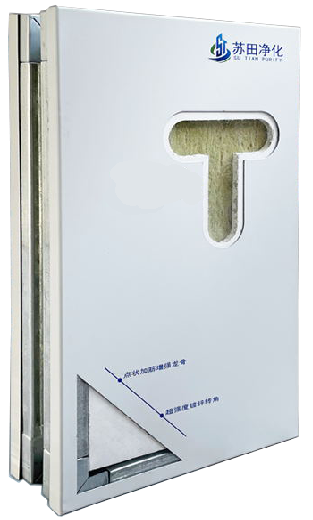
1. When a Tiny Gap Nearly Shuts Down a Production Line
In controlled environments, even microscopic breaches in the building envelope can compromise strict cleanliness standards. In one pharmaceutical packaging suite, an ISO Class 7 zone continuously drifted toward Class 8 despite newly installed HEPA filters, strict gowning protocols, and steady pressure cascades.
A smoke pencil test eventually revealed tiny wisps of air being drawn directly into panel seams. Micro-gaps hidden behind vertical trims had converted the walls into an active pathway for unfiltered air.
This scenario highlights a fundamental rule of contamination control: even advanced HVAC systems cannot compensate for an unsealed building envelope. Achieving a gap-free wall system is essential to separate cleanroom zones from unconditioned surrounding areas.
2. Understanding Why Gaps Form in the First Place
Preventing joint gaps requires identifying and mitigating their primary structural causes:
-
Floor Unevenness: Concrete subfloors poured to standard tolerances (e.g., 5 mm) cause rigid panels to rock unless leveled with adjustable base channels.
-
Thermal Expansion: Temperature fluctuations during construction cause panel materials to expand or contract, creating hairline fractures along vertical joints if not accommodated.
-
Improper Joining Sequence: Prematurely tightening corner joints leads to cumulative misalignment, resulting in wedge-shaped gaps that wet sealants cannot reliably fill.
A joint gap of just 0.2 mm can increase local particle infiltration by an order of magnitude in a negative-pressure cleanroom.
3. Joint Technology for Zero-Gap Envelopes
To prevent structural failure modes, precision engineering relies on mechanical joining mechanisms rather than topical sealants.
Key Components of Advanced Cleanroom Joints:
-
Integrated Cam-Lock Systems: Draw adjacent panels together with precise, measurable torque.
-
Co-Extruded EPDM Gaskets: Factory-integrated into aluminum frame profiles to compress uniformly by approximately 30%, forming a continuous airtight seam that absorbs thermal movement.
-
Self-Aligning Tongue-and-Groove Profiles: Ensure flush interior surfaces without step-offs, eliminating crevices where moisture, mold, or bacteria can harbour.
Compared to traditional wet-sealant joints, mechanically compressed gasket joints maintain seal integrity over thousands of pressure cycles and provide superior cleanability.
4. Standardized Installation Sequence
Achieving predictable, leak-free results requires a disciplined, step-by-step installation methodology:
-
Subfloor Mapping: Utilize laser levels across the footprint to identify high and low points before panel placement.
-
Base Channel Alignment: Shim and secure the base channel to ensure a perfectly flat foundation.
-
Corner-Out Assembly: Erect corner panels first and lock them loosely, working outward in both directions to absorb minor alignment tolerances toward the center.
-
Calibrated Torque Tightening: Apply a torque wrench set to specified values (e.g., 10 Nm) across all cam-locks to achieve uniform gasket compression.
5. Performance Verification and Regulatory Compliance
Documenting envelope tightness requires standardized testing protocols to verify zero-leak performance:
-
Visual Inspection: Conducted under raking light to identify surface irregularities or misalignments.
-
Smoke Pencil Integrity Testing: Applied directly along all seams, joints, and perimeter trims to detect air movement.
-
Pressure Decay Testing: Performed per ISO 14644-3 to verify total room seal integrity.
Regulatory Alignment
| Standard / Regulation | Core Requirement | Impact of Gap-Free Panels |
| EU GMP Annex 1 | Surfaces must be impervious, easy to clean, and resistant to microbial growth. | Eliminates hidden moisture traps and micro-cavities. |
| ISO 14644-3 | Mandates room integrity and leak testing protocols. | Ensures first-time pass rates for pressure decay testing. |
| ISO 9001 | Full traceability of manufacturing materials and components. | Guarantees consistent joint tolerances and material quality. |